• Find a Member
  • Find a Member
Contact
Donate
  • Home
  • What We Do
    • Annual Conference
      • Theme & Focus
      • Conference Presenters
      • Schedule & Program
      • Breakout Sessions
      • Registration
      • Location & Venue
      • Scholarships & Grants
      • Sponsors & Exhibitors
      • Request for Proposals (RFP)
      • Past Conferences
    • Regional Symposia
    • What Leaders Need
    • Best of Texas
    • The Expert Edge
    • Advocacy
      • National Adult Education & Family Literacy Week
    • Annual Survey
  • Why Literacy?
    • Defining Literacy
    • Literacy Facts
    • Literacy & the Economy
  • Calendar
    • Literacy Texas Events
    • Literacy Calendar
  • Resources
    • Nonprofit Administration
    • Program Structure
    • Classroom Instruction
    • Grants, Funding, & Rebates
    • Organizations, Groups, & Media
    • Plain Language
  • Connect
    • Find a Program
    • Ways to Give
    • Blog
    • Newsletter
    • Contact Us
  • About
    • History
    • Mission
    • Board of Directors
    • Meet the Team
  • Impact
    • Celebrating Students
      • 2024 Student Hall of Fame
      • 2023 Student Hall of Fame
      • 2022 Student Hall of Fame
    • Celebrating Volunteers
      • 2024 Volunteer Hall of Fame
      • 2023 Volunteer Hall of Fame
      • 2022 Volunteer Hall of Fame
    • Learner Stories
    • Testimonials
Menu

The Literacy and Journalism Connection

October 14, 2026 by Literacy Texas

Salazar, Magda

This is a guest post by Magda Salazar, Literacy Texas board member, in celebration of Hispanic Heritage Month.

My name is Magda Salazar. For the last four years, I have served as a member of the Literacy Texas board of directors. We meet regularly to discuss the state of literacy in Texas. This includes looking at the challenges practitioners face and how our programming can add support and value, identify rising resources and tools and how the organization can leverage its own capacity or position to access those features to design solutions, and we always want to elevate people along the way.

As we close Hispanic Heritage Month, I’m sharing my thoughts on the intersection and impact of literacy and journalism, and when applied, how one does not exist without the other.

I grew up reading Agatha Christie books. Nancy Drew, the Hardy Boys, Judy Blume, and the Babysitters Club, too. My reading material didn’t come with cultural representation, but the storylines and characters did ask questions and connect the dots, experienced the thrill of the chase in search of answers, and practiced problem-solving and being curious. 

Reading also developed in me the more quiet attributes, such as the role and value of nuance, imagination, care for my fellow human, creativity, exploration, discovery, hypothesizing, pivoting, introducing new elements, and building. Add in a dash of attention deficit hyperactivity disorder and the sky is the limit on engagement and practice. 
 
Without literacy, these traits get diminished. And without journalism and practice, these same human traits get lost in translation. These traits get traded in for efficiency, and a means to an end.
 
At a program and education level, we organize literacy in terms of skills, capacity, access, and economic attainment. How much do we think or build in to literacy as connection, visualization, storytelling, imagination, and critical thinking? You know that puzzle that has you follow numbers so that you can get to the hidden design, of a bird, a plane, a flower of sorts? I wonder if people hear each other’s stories with that creativity.
 
I’ve been thinking of journalism as that puzzle. The who, what, when, where, and how each act as the numbers in the design that is not yet complete. How each dot acts is a declarative statement, and the through lines start to reveal the next connector in the story, until together it paints a fuller, more thorough picture. I went on to pursue sports journalism for almost 10 years. Talk about storytelling with numbers! Even sports and sports journalism has its element of literacy.
My commitment to literacy is rooted in my own story. Growing up along the Texas border in El Paso, I benefited from programs that supported reading development from an early age – including Head Start – and went on to compete in poetry, prose, and debate. I know firsthand what access to literacy resources can open up for a child.
 
Every day, in little ways, I celebrate literacy and journalism, for everything the alphabet, words, stories, writers, books, and news provide. 
 
I marvel at the connection both have played in my life, in access and creativity, and in a vocabulary level my kiddo playfully disparages and regularly applies in her own conversations. (Fun story: my kiddo is often asked by her friends to define and clarify words she uses and readily explains. I have even received a thank-you or two (or three) for the vocabulary she now possesses.)
 
It’s also why I founded By the Numbers: Understanding the Impact and Progress of Latino Journalists in North Texas, an independent research initiative documenting the professional experience of Latino journalists in the Dallas-Fort Worth media market. The journalists’ stories, and the communities they serve, deserve to have a space of their own. 
 
So, I elevate literacy and journalism – beyond Hispanic Heritage Month or even Literacy Month. Literacy is every day. Journalism is every day. In English and in Spanish. In French when I get to practice it. 
 
It has been a heavy year, for both literacy and journalism, the practitioners and the journalists, the students and the media consumers, and for the art of the written (or documented and verified) word.
 
But, I see the practitioners who give of themselves to share and grow literacy in others. 
 
I applaud the students who pursue literacy development and growth for themselves, their families, and their well-being. 
 
And I recognize the journalists who expand literacy through their storytelling and information sharing.

Magda Salazar has served on the Literacy Texas Board of Directors for four years. Read her full bio or visit magdasalazar.com to learn more about her work, and click here to see her 2025 blog post, A Letter to the Literacy Texas Community.

We'd love to have you join us!

Join our mailing list so you don’t miss any news:

  • Local and national literacy news
  • Conference updates
  • Regional symposia
  • Best of Texas
  • Advocacy 
  • …more!
ADD YOUR NAME TODAY

Filed Under: Advocacy, Celebrations & Special Days Tagged With: guest post, journalism, literacy

Clear Voices, Strong Futures: How Pronunciation Builds Confidence and Connection

August 1, 2026 by Literacy Texas

This is a guest post by Leanne Chacon, Director of Curriculum and Training at Intercambio Uniting Communities, a 2026 Annual Conference exhibitor.

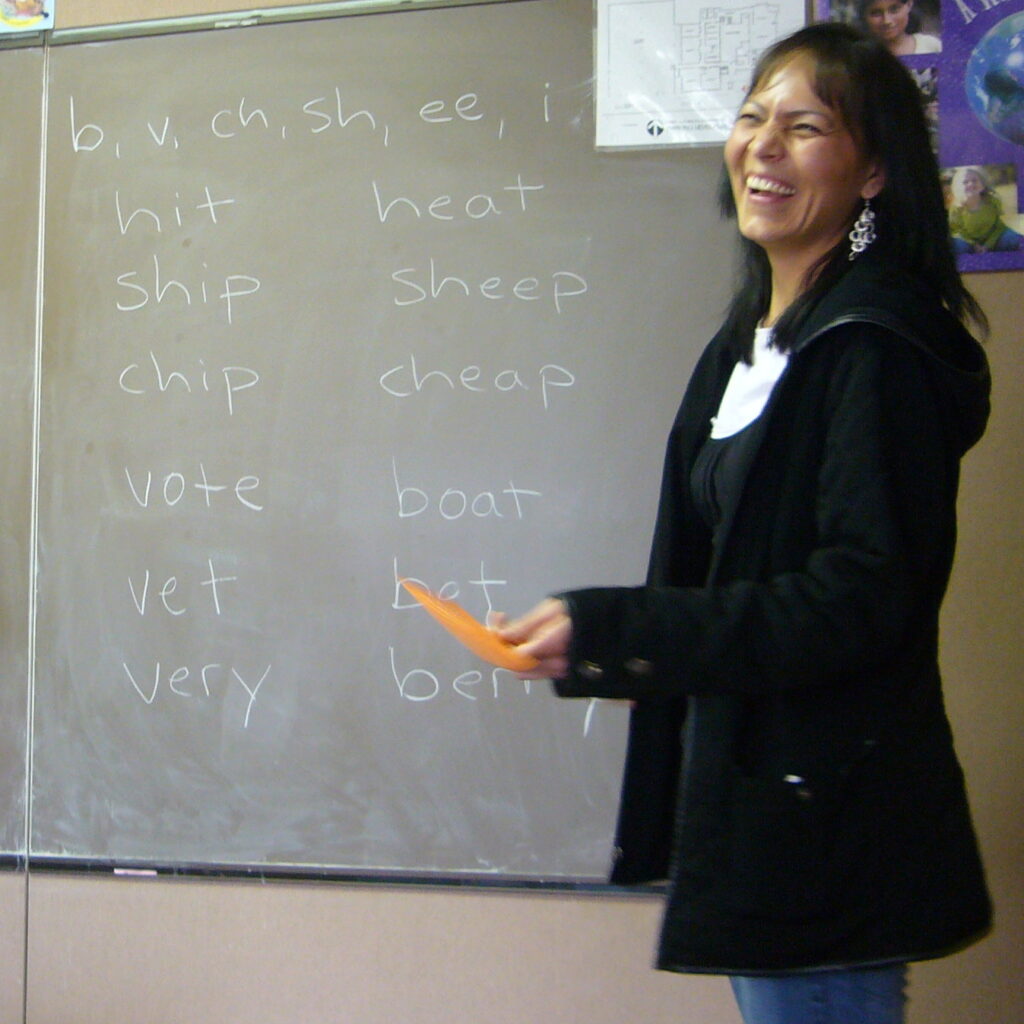
Every week, English teachers, tutors, and adult learners gather to practice greetings, laugh at mistakes, and celebrate small victories. One day, the lesson focuses on the difference between the words leave and live, a pronunciation distinction that may seem like a small thing until one learner shares that people often have trouble understanding her at work. The teacher leads the group through focused practice while drawing the group’s attention to strategies that help them distinguish the two vowel sounds.

The following week, the learner returns with a smile.

“My client understood me the first time!”

Stories like this unfold every day in adult education contexts across the country, and that moment is about so much more than pronunciation.

It is about confidence. It is about connection. It is about being understood and being heard.

At Intercambio Uniting Communities, we believe pronunciation is not about sounding like a “native” English speaker. It is about helping adult English learners communicate clearly and confidently so they can build relationships, participate in their communities, and advocate for themselves.

It is also about finding communication strategies together. Meaningful conversations happen when speakers and listeners approach one another with patience, curiosity, and a willingness to understand.

Why Pronunciation Matters

Many adult English learners know what they want to say but hesitate to speak because they worry they will not be understood.

When learners experience successful conversations with a coworker, a healthcare provider, a neighbor, or their child’s teacher, their confidence grows. They become more willing to participate in class, ask questions, and engage in their communities.

Pronunciation instruction is not about perfection. It is about giving learners the confidence to use their voices.

For volunteer teachers, pronunciation can sometimes feel intimidating to teach. The good news is that it does not have to be! Simple activities that encourage listening, noticing patterns, and practicing meaningful communication can make a significant difference, even for learners with limited literacy skills.

Helping Learners Be Understood

One of the key messages we share when training volunteer teachers is that pronunciation is not about eliminating accents. Everyone has an accent, and it reflects a person’s identity, experiences, and linguistic background.

Instead, we focus on intelligibility, helping learners communicate clearly enough that others understand their message. At the same time, we encourage English speakers to recognize that effective communication is a shared responsibility. Listening with patience, asking thoughtful clarifying questions, and valuing diverse accents all help create conversations where everyone can participate.

Research shows that successful communication depends on much more than individual sounds. Stress, rhythm, word emphasis, and listening skills all play an important role.  As learners become more aware of these patterns and begin using them with greater consistency, they communicate more effectively and with greater confidence.

That learner-centered philosophy has shaped Intercambio’s long-standing collaboration with Color Vowel®, most recently on the third edition of our Pronunciation Fun with Pictures. Together, we have created a resource that makes pronunciation instruction more approachable for teachers and learners.

One feature of Pronunciation Fun with Pictures is its use of minimal pairs – words that differ by just one sound but have different meanings (such as sheep and ship). Practicing these word pairs helps learners notice important sound distinctions and produce them more accurately in everyday conversation.

The Color Vowel® system gives teachers and learners a simple, shared language for talking about pronunciation without relying on letter names or phonetic symbols. Instead of saying, “Let’s practice the ‘e’ sound,” teachers can say, “Let’s practice GREEN TEA words,” reducing the confusion that English spelling often creates.

Learners tend to find some sounds more challenging than others, and every page of the book helps build overall pronunciation skills which leads to greater confidence in real-world situations where clear communication is key.

Stronger, More Connected Communities Through Conversation

At Intercambio, our mission is about more than just teaching English. It is about bringing people together to build skills, confidence, and life-changing connections that ultimately cultivate cross-cultural understanding,  connection and belonging.

Every successful conversation strengthens confidence. Every meaningful interaction builds connection. Over time, those connections help create stronger, more welcoming communities.

It is precisely for this reason that we believe pronunciation deserves a place in every adult English classroom. It is not about helping learners sound “perfect.” It is about helping them feel confident enough to participate fully in the lives they are building.

Join the Conversation!

We hope you’ll join us as we explore how thoughtful pronunciation instruction helps every learner feel heard, understood, and connected, while also creating opportunities for employment, education, civic participation, leadership, and meaningful belonging.

We’re excited to launch Intercambio Training on August 6, a new series of interactive professional development opportunities for adult English educators and program leaders. Our growing catalog of training sessions offers practical, research-informed strategies on pronunciation, learner engagement, cultural humility, volunteer support, instructional practices, and more. 

Whether you’re looking to strengthen your own teaching or provide professional development for your entire team, Intercambio Training offers flexible learning opportunities designed to help educators – and ultimately learners – thrive.

We'd love to have you join us!

Join our mailing list so you don’t miss any news:

  • Local and national literacy news
  • Conference updates
  • Regional symposia
  • Best of Texas
  • Advocacy 
  • …more!
ADD YOUR NAME TODAY

Filed Under: Classroom Learning, Resources Tagged With: EAL & ESL, guest post, ideas

Sign up for our newsletter to stay in touch with news, events, and updates.

Subscribe Now
mailbox (1)
Mailing Address:
Literacy Texas
PO Box 11
Rockwall, TX 75087-0011
512-559-1325
Online Contact

Quick Links

  • Home
  • What We Do
  • Annual Conference
  • Regional Symposia
  • Calendar
  • Home
  • What We Do
  • Annual Conference
  • Regional Symposia
  • Calendar
  • Defining Literacy
  • Literacy Facts
  • Resources
  • Contact Us
  • Donate
  • Defining Literacy
  • Literacy Facts
  • Resources
  • Contact Us
  • Donate

Events Calendar

  • Nov 6
    2026 South Texas Literacy Symposium
    November 6th
    View Details
  • Nov 12
    Best of Texas: Language, Literacy, and Learning Disabilities
    November 12th
    View Details
  • Nov 17
    LitTX Group Chat – November 2026
    November 17th
    View Details
  • View Calendar
Copyright 2026 Literacy Texas | All Rights Reserved | Web Design and Marketing by Web International | View our Privacy Policy
  • Home
  • What We Do
    • Annual Conference
      • Theme & Focus
      • Conference Presenters
      • Schedule & Program
      • Breakout Sessions
      • Registration
      • Location & Venue
      • Scholarships & Grants
      • Sponsors & Exhibitors
      • Request for Proposals (RFP)
      • Past Conferences
    • Regional Symposia
    • What Leaders Need
    • Best of Texas
    • The Expert Edge
    • Advocacy
      • National Adult Education & Family Literacy Week
    • Annual Survey
  • Why Literacy?
    • Defining Literacy
    • Literacy Facts
    • Literacy & the Economy
  • Calendar
    • Literacy Texas Events
    • Literacy Calendar
  • Resources
    • Nonprofit Administration
    • Program Structure
    • Classroom Instruction
    • Grants, Funding, & Rebates
    • Organizations, Groups, & Media
    • Plain Language
  • Connect
    • Find a Program
    • Ways to Give
    • Blog
    • Newsletter
    • Contact Us
  • About
    • History
    • Mission
    • Board of Directors
    • Meet the Team
  • Impact
    • Celebrating Students
      • 2024 Student Hall of Fame
      • 2023 Student Hall of Fame
      • 2022 Student Hall of Fame
    • Celebrating Volunteers
      • 2024 Volunteer Hall of Fame
      • 2023 Volunteer Hall of Fame
      • 2022 Volunteer Hall of Fame
    • Learner Stories
    • Testimonials