• Find a Member
  • Find a Member
Contact
Donate
  • Home
  • What We Do
    • Annual Conference
      • Location & Venue
      • Theme & Focus
      • Request for Proposals (RFP)
      • Schedule & Program
      • Breakout Sessions
      • Conference Presenters
      • Registration
      • Scholarships & Grants
      • Sponsors & Exhibitors
      • Past Conferences
    • Regional Symposia
    • What Leaders Need
    • Best of Texas
    • The Expert Edge
    • Advocacy
      • National Adult Education & Family Literacy Week
    • Annual Survey
  • Why Literacy?
    • Defining Literacy
    • Literacy Facts
    • Literacy & the Economy
  • Calendar
    • Literacy Texas Events
    • Literacy Calendar
  • Resources
    • Nonprofit Administration
    • Program Structure
    • Classroom Instruction
    • Grants, Funding, & Rebates
    • Organizations, Groups, & Media
    • Plain Language
  • Connect
    • Find a Program
    • Ways to Give
    • Blog
    • Newsletter
    • Contact Us
  • About
    • History
    • Mission
    • Leadership
  • Impact
    • Celebrating Students
      • 2024 Student Hall of Fame
      • 2023 Student Hall of Fame
      • 2022 Student Hall of Fame
    • Celebrating Volunteers
      • 2024 Volunteer Hall of Fame
      • 2023 Volunteer Hall of Fame
      • 2022 Volunteer Hall of Fame
    • Learner Stories
    • Testimonials
  • Home
  • What We Do
    • Annual Conference
      • Location & Venue
      • Theme & Focus
      • Request for Proposals (RFP)
      • Schedule & Program
      • Breakout Sessions
      • Conference Presenters
      • Registration
      • Scholarships & Grants
      • Sponsors & Exhibitors
      • Past Conferences
    • Regional Symposia
    • What Leaders Need
    • Best of Texas
    • The Expert Edge
    • Advocacy
      • National Adult Education & Family Literacy Week
    • Annual Survey
  • Why Literacy?
    • Defining Literacy
    • Literacy Facts
    • Literacy & the Economy
  • Calendar
    • Literacy Texas Events
    • Literacy Calendar
  • Resources
    • Nonprofit Administration
    • Program Structure
    • Classroom Instruction
    • Grants, Funding, & Rebates
    • Organizations, Groups, & Media
    • Plain Language
  • Connect
    • Find a Program
    • Ways to Give
    • Blog
    • Newsletter
    • Contact Us
  • About
    • History
    • Mission
    • Leadership
  • Impact
    • Celebrating Students
      • 2024 Student Hall of Fame
      • 2023 Student Hall of Fame
      • 2022 Student Hall of Fame
    • Celebrating Volunteers
      • 2024 Volunteer Hall of Fame
      • 2023 Volunteer Hall of Fame
      • 2022 Volunteer Hall of Fame
    • Learner Stories
    • Testimonials
Menu

The 5 AM Scholar: How Texas Adults Are Redefining Where and When Learning Happens

October 17, 2025 by Literacy Texas

This is a guest post by Vaschni Savain of Brainchild Unlimited, a 2025 Annual Conference sponsor.


It’s 5:47 AM in Houston.

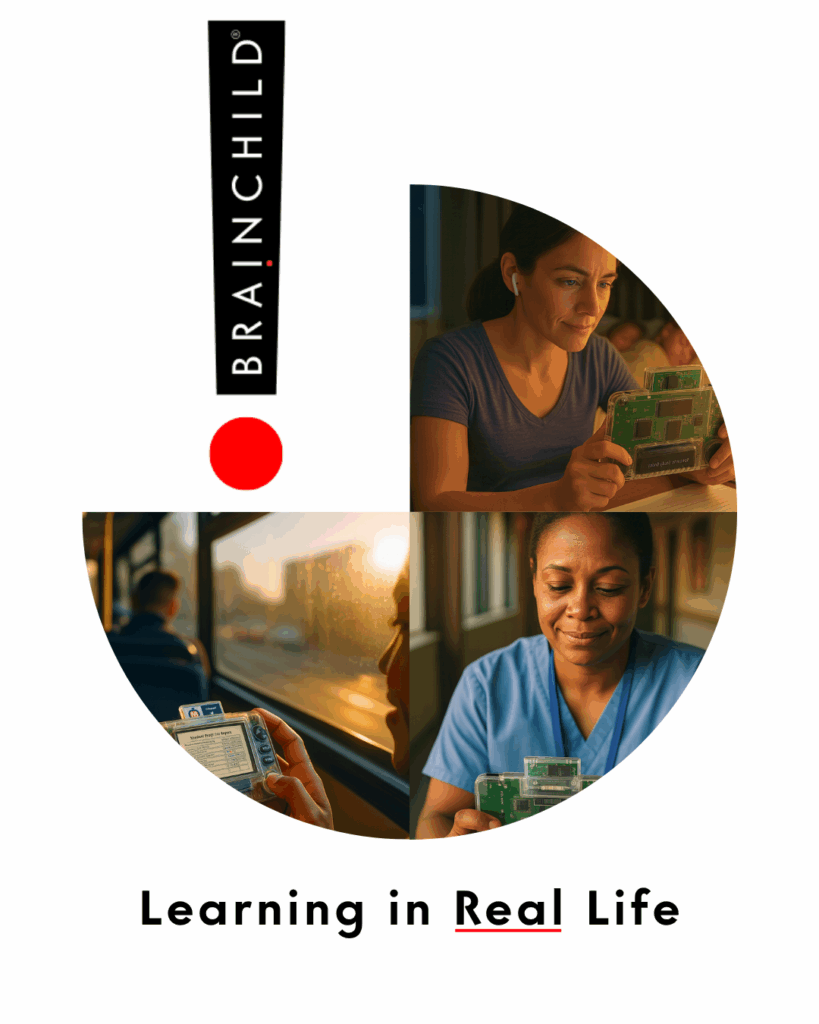
While the city sleeps, Jasmine sits in her parked car outside the elementary school where she works as a custodian, earbuds in, reviewing fractions on her handheld device. In two hours, she’ll clock out, drive across town to her second job at a retail store, then pick up her three kids from aftercare. But right now, in these stolen 20 minutes before her shift starts, she’s mastering algebra.

Sound impossible? If you’re an adult literacy educator, you know it’s just another Tuesday.

The Myth of the “Traditional” Adult Learner

We talk about adult education like it happens in neat, scheduled blocks. Tuesday and Thursday evenings, 6 – 8 PM. But here’s the reality: your most determined students are often the ones who can least afford traditional schedules.

Take Jasmine. She’s been working toward her HSE for three years—not because she lacks motivation, but because life keeps happening. When her youngest got sick, she missed two weeks of classes. When her car broke down, she couldn’t make it to campus for a month. When her hours got cut at one job, she picked up shifts at another.

Traditional education says Jasmine is “inconsistent.” We say she’s incredibly resourceful.

Education in the Margins: Where Real Learning Happens

The most transformative education often happens in the spaces between life’s demands:

The Break Room Scholar: Marcus, a line cook in San Antonio, uses his 15-minute breaks to work through science lessons. Three breaks a day, five days a week. In six months, he’s completed two full units while his co-workers scroll social media.

The Commuter Student: Patricia takes public transit 90 minutes each way to her job as a hotel housekeeper in Dallas. That’s three hours daily of uninterrupted study time—if she has curriculum that works offline and doesn’t drain her phone battery.

The Night Shift Parent: After her kids are asleep, Carmen settles into her kitchen with a cup of coffee and her Study Buddy device. No internet required, no glowing screen to wake the baby, just quiet progress toward her goals.

Learning That Bends—Without Breaking

Here’s what traditional education gets wrong: it assumes adult learners should rearrange their lives around their education. But Carmen can’t abandon her kids for evening classes. Marcus can’t leave his kitchen during dinner rush. Patricia can’t afford to cut her work hours.

What they need is education that respects their reality while honoring their ambition.

Flexible doesn’t mean compromised. Just because Carmen studies at midnight doesn’t mean her education should be less rigorous than someone in a classroom.

Self-paced doesn’t mean solitary. When Marcus completes a challenging unit during his break, he’s not just learning science—he’s proving to himself that he can master anything he sets his mind to.

Mobile doesn’t mean minimal. Patricia’s commute curriculum is comprehensive, covering everything she needs for her HSE while fitting into the time she actually has available.

The Ripple Effect: Why This Transforms Families

When Jasmine finally passes her HSE exam, something magical happens. Her 10-year-old son stops saying “I’m just bad at math” and starts asking “How did you figure that out, Mom?” Her teenage daughter, who’s been struggling in high school, suddenly has proof that it’s never too late to turn things around.

But the transformation starts long before graduation day. It starts at 5:47 AM when her kids see mom studying in the car. It starts when Marcus explains photosynthesis to his nephew using concepts he learned during his break. It starts when Patricia helps her daughter with homework using skills she’s developing on the bus.

Honoring the Hustle: What Educators Can Do

If you’re serving adult learners in Texas, you already know your students are incredibly capable. They’re managing complex lives with grace, working multiple jobs with dignity, and pursuing education despite—not because of—their circumstances.

What they need from us isn’t sympathy or lower standards. They need:

Respect for their time: Every minute of study time is precious when stolen from sleep or family time.

Honor for their intelligence: They’re not “behind.” They’re moving forward—at the pace life allows.

Tools that work anywhere: In break rooms, on buses, in cars, in quiet kitchens after midnight.

Content that builds on their experience: They’ve been problem-solving, budgeting, negotiating, and leading all their lives. Education should acknowledge that wisdom.

Practical Tools: Meeting Students Where They Actually Are

Ready to support your 5 AM scholars? Here are concrete strategies that work for students with complex lives:

Flexible Learning Solutions

“Study Anywhere” Kits: Provide offline-capable devices or printed materials that don’t rely on WiFi. Students like Patricia can study during long commutes, and Marcus can make the most of his breaks—without worrying about data limits or dropped connections. Devices like Brainchild’s Study Buddy III handheld make this possible, delivering a full curriculum anytime, anywhere—without the frustration of low bandwidth, drained batteries, or inaccessible content.

Micro-Learning Modules: Break content into 10-15 minute chunks. A complete lesson that fits into a work break is more valuable than a 2-hour session they can’t attend.

Multiple Access Points: Offer the same content through different delivery methods—online for when they have WiFi, offline for when they don’t, and print backup for emergency situations.

Schedule-Smart Strategies

Rolling Enrollment: Let students start anytime rather than waiting for traditional semester starts. When Carmen finally gets childcare figured out, she shouldn’t have to wait three months to begin.

Competency-Based Progression: Focus on what students know, not how long they’ve been studying. Some students master concepts quickly during intense study bursts; others need longer, steadier approaches.

“Life Happens” Policies: Build in formal accommodations for the realities of adult life—sick kids, car troubles, work schedule changes. Make re-entry seamless, not shameful.

Communication That Works

Text-Based Check-ins: Quick encouragement via text fits better into busy lives than lengthy phone calls. “Great progress on Unit 3! You’ve got this.”

Peer Connection Networks: Connect students with similar schedules or life circumstances. The single mom working nights can support the single dad working days.

Progress Celebrations: Acknowledge small wins immediately. When Marcus completes a unit during his break, that achievement deserves recognition right away, not at the next class meeting.

Family-Centered Approaches

Take-Home Learning: Provide materials that students can share with family members. When Jasmine reviews math concepts, her kids can learn alongside her.

Flexible Testing: Offer multiple testing times and formats. Some students test better at 7 AM before work; others prefer Saturday mornings when childcare is available.

Success Documentation: Help students track and share their progress. A certificate for completing a challenging unit means more when the whole family can celebrate.

Resource Maximization

Community Partnerships: Connect with local businesses that employ your students. Maybe Marcus’s restaurant would support a 15-minute learning break policy if they understood the long-term benefits.

Technology Lending: Provide devices that students can take home. Learning shouldn’t stop because someone can’t afford the latest technology.

Bilingual Support Systems: For Spanish-speaking learners, provide content that switches seamlessly between languages—building on linguistic strengths rather than treating them as barriers.

The key insight: Your most successful interventions will be the ones that honor your students’ intelligence while adapting to their reality. They’re not failing to fit your system—your system needs to evolve to serve them.

The Quiet Power of 5 AM

There’s something profound about studying at 5 AM. The world is quiet. The day’s demands haven’t started yet. It’s just you, your goals, and the belief that this moment—this lesson, this practice problem, this small step forward—matters.

Jasmine knows this truth. So does Marcus. So does Patricia. They’re not studying at unconventional hours because they have to—they’re studying because they want to, because they’ve found a way to make education fit into lives that don’t stop for traditional schedules.

As educators, our job isn’t to change their lives to fit our systems. It’s to build bridges between their dreams and their reality.

Because transformation doesn’t keep office hours. It happens at 5 AM in a parking lot, during 15-minute breaks, on evening commutes, and after kids are tucked into bed. It happens whenever someone decides that today is the day to take one more step toward who they’re becoming.

How are you supporting the 5 AM scholars in your program? Share your stories—because every unconventional learning journey deserves recognition, and every creative solution might inspire another educator.

Contact Brainchild Unlimited | 800-811-2722 | www.brainchild.com

Get Texas literacy updates

Join our mailing list so you don’t miss any news:

  • Local and national literacy news
  • Conference updates
  • Regional symposia
  • Best of Texas
  • Advocacy 
  • …more!
Click here to join the list

Filed Under: Community, Digital Literacy, EAL & ESL, Guest Post, High School Equivalency, Learner Persistence, Literacy for Work, Resources Tagged With: adult literacy, cbo, literacy programs

Adult Literacy and the Workforce: Building Skills for a Better Future

September 19, 2025 by Literacy Texas

This is a guest post by BurlingtonEnglish, a 2025 Annual Conference sponsor.

In today’s job market, literacy extends far beyond the ability to read and write. It includes understanding, communicating, and applying knowledge in practical ways that enable individuals to function effectively at work and in daily life. Yet over 43 million adults in the U.S. possess low literacy skills, according to the National Center for Education Statistics. That’s nearly one in five adults who may struggle with filling out a job application, understanding workplace safety protocols, or even reading a paycheck.

This skills gap has a ripple effect not just on individual careers, but on families, communities, and the economy. To meet the demands of today’s workforce, adult education must take a holistic approach, integrating job preparation, soft skills, digital literacy, and financial literacy into literacy instruction.

One powerful tool addressing this need is Burlington Ready to Work, a comprehensive course designed to help adult learners build the essential skills they need to find and keep employment in today’s competitive job market.

Why Adult Literacy Matters More Than Ever

Workforce success begins with literacy. Adults with strong literacy and communication skills are more likely to obtain steady jobs, earn higher wages, and pursue career advancement. On the flip side, low literacy often correlates with low wages, job insecurity, and limited upward mobility.

But employers also feel the impact. From errors in communication to safety concerns and limited productivity, businesses lose time and money when their workforce lacks basic skills. That’s why investing in adult literacy and equipping learners with relevant, work-focused education is critical for long-term economic stability.

Job Preparation: More Than Resumes

Today’s job seekers need more than a polished resume, they need to understand how to interpret job postings, complete online applications, and prepare for interviews. Burlington Ready to Work directly supports this need by providing workforce readiness vocabulary, functional language practice, and real-world job scenarios.

Its curriculum offers career-focused lessons that simulate real workplace tasks. Whether it’s communicating with customers, interacting with a supervisor, or preparing for a job interview, learners get practical experience that translates directly to the workplace.

This kind of job preparation gives adult learners confidence and competence, not only to get a job, but to succeed in it.

Soft Skills: The Hidden Currency of Employment

In addition to hard skills, employers consistently prioritize soft skills—communication, teamwork, adaptability, and time management. These are the skills that help people work effectively with others and handle the day-to-day challenges of professional life.

Burlington Ready to Work incorporates explicit soft skills training into its lessons. Learners read and talk about teamwork, resolving workplace conflicts, and managing time and tasks efficiently. This focus ensures learners aren’t just trained for the technical aspects of a job but are equipped to thrive in diverse work environments.

Digital Literacy: The New Baseline

In today’s economy, digital skills are no longer optional. Job applications, communication with employers, online scheduling systems, and even time clocks are increasingly digitized. Yet, many adults with low literacy also lack digital access and confidence.

BurlingtonEnglish bridges this gap by integrating technology-based instruction into its platform. Learners not only gain valuable literacy skills and workplace vocabulary but also learn how to navigate digital tools safely and effectively, whether writing emails or using job search platforms. The online platform is intuitive and learner-friendly, making it accessible to adults with limited digital experience.

This dual focus on language and digital literacy prepares learners for the realities of modern workplaces—where being digitally prepared is essential.

Financial Literacy: Empowering Life Beyond the Job

Financial stress is one of the leading causes of workplace absenteeism and distraction. Many adult learners struggle with budgeting, credit management, or understanding their pay stubs, issues that can lead to financial instability.

Recognizing this, Burlington Ready to Work includes financial literacy content that helps learners understand personal finance concepts like budgeting, banking, and credit. These lessons are designed with clear language, real-life examples, and practical tools to empower adults to take control of their financial futures.

Financial literacy strengthens not only the worker, but their household and community, promoting long-term economic stability.

Why this Matters

Adult literacy is a foundation for opportunity, and workforce readiness is the bridge to a better future. With the right tools, training, and support, every adult has the potential to succeed in today’s workforce. BurlingtonEnglish offers a pathway forward, helping adult learners gain the skills, confidence, and readiness they need to succeed at work and beyond.

To learn more, watch our Burlington Ready to Work video!

Click here to reach your BurlingtonEnglish representative.

Get Texas literacy updates

Join our mailing list so you don’t miss any news:

  • Local and national literacy news
  • Conference updates
  • Regional symposia
  • Best of Texas
  • Advocacy 
  • …more!
Click here to join the list

Filed Under: Community, Digital Literacy, EAL & ESL, Guest Post, High School Equivalency, Information Literacy, Literacy for Work, Resources Tagged With: adult literacy, cbo, literacy programs

From Reading to Reality: Turning Literacy Into Livelihood

August 21, 2025 by Literacy Texas

This is a guest post by Southern Careers Institute, a 2025 Annual Conference sponsor.

For millions of Texans, mastering basic reading, writing, and numeracy is the first hard-won victory on the road to a better life. Roughly 4.8 million adults in the state still need some form of literacy education.

However, once adults build literacy skills, what comes next? How do newly literate Texans convert foundational skills into specialized expertise that puts food on the table?

Southern Careers Institute, a Texas-born career college with campuses from Brownsville to Austin and a growing roster of online options, exists to answer the question. Literacy opens the door to modern work, but employers hire for competence with specific tools, technologies, and regulations. SCI designs every program with that reality in mind.

Programs in healthcare, skilled trades, technology, and more embed industry vocabulary and document-heavy tasks (such as charting vital signs, interpreting wiring schematics, or troubleshooting cloud networks) into daily lab practice so that reading becomes doing.

Contextualized instruction turns comprehension into competence

Research shows that adults learn best when new information is tethered to immediate goals. SCI’s instructors, many of whom bring years of field experience, translate textbook language into job-site readiness the moment a lesson begins. In an HVAC classroom, for example, a vocabulary that includes “thermodynamics” and “refrigerant cycle” is paired with a lab assignment that requires students to read a pressure-temperature chart and adjust gauges on a live system. The reading comprehension built in earlier literacy classes now drives hands-on troubleshooting, and mistakes become teachable moments instead of barriers.

Healthcare programs follow the same pattern. Students study medical terminology one day and transcribe patient-intake notes the next, reinforcing spelling, abbreviations, and privacy regulations in real time. By weaving technical literacy into performance tasks, SCI helps adult learners internalize the specialized language employers expect without forcing them back into abstract theory alone.

Adult-friendly pacing and supports

Time and cost are chief concerns for adult learners who already juggle work and family. Most SCI programs can be completed in as little as five to fifteen months, depending on full- or part-time enrollment, so momentum from an adult-education milestone is not lost to multi-year detours.

Day and evening schedules, online formats, and career-services coaching reduce friction even further. SCI’s CareerHub job-matching tool lets students see Texas-wide openings mapped against the licenses or certifications each role requires, creating a clear line of sight from coursework to paycheck.

Employer alignment closes the skills gap

Texas businesses routinely cite a shortage of workers with soft skills and technical know-how. SCI maintains advisory boards of regional employers who preview curricula and suggest updates so that lessons stay current. Graduates are trained to sit for industry-recognized certifications and when appropriate train on advanced equipment their future supervisors already use, rather than relearning their skills from scratch on the job.

By the time an SCI student unwraps a diploma or certificate, the distance from literacy to livelihood has been reduced to a single step of applying for a new job.

Walking through the open door

Texas still has work to do before every adult reaches basic literacy, but thousands cross that threshold each year. SCI stands ready for the adults who built foundational skills, transforming the ability to read about opportunity into specialized training. For adults who have already proven they can learn, the next lesson is simple: specialized skills are within reach, and the classroom is designed for the lives they already lead.

Adults ready to take their next step towards a new career should visit scitexas.edu

Get Texas literacy updates

Join our mailing list so you don’t miss any news:

  • Local and national literacy news
  • Conference updates
  • Regional symposia
  • Best of Texas
  • Advocacy 
  • …more!
Click here to join the list

Filed Under: Annual Conference, Community, EAL & ESL, Guest Post, High School Equivalency, Resources Tagged With: adult literacy, cbo, literacy programs

The Power of Connection: Strengthening English Learning Nationwide

July 23, 2025 by Literacy Texas

By Rachel Fuchs, Intercambio Director of Product Sales and National Network

Originally published March 24, 2025 | Updated for Literacy Texas

At Intercambio, Connection Drives Everything We Do

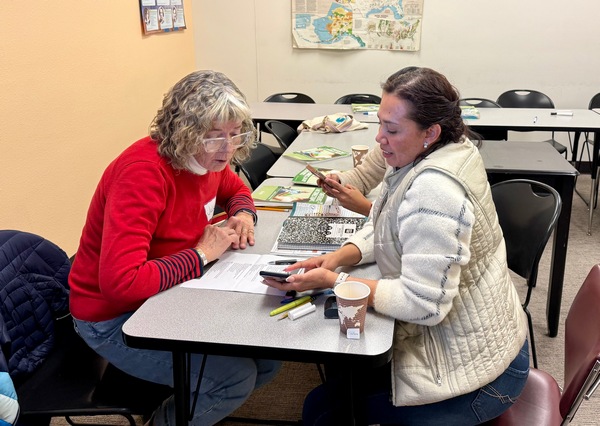
Based in Colorado, Intercambio is a national nonprofit that builds meaningful connections and stronger communities through English education. All our programming stems from the belief that shared learning experiences and authentic relationships break down barriers, build confidence, and foster inclusion. While our day-to-day focus is often on supporting one-on-one connections between our 500+ local English learners and their teachers, our national team is focused on expanding that same spirit of connection at the organizational level – ultimately reaching tens of thousands more.

Launching the Intercambio Network

That vision became the foundation of the Intercambio Network. Since 2020, more than 160 organizations have participated in the Network’s growing number of opportunities to connect, share, and grow together. Membership is offered at two levels – Family and Friend – and both provide valuable access to professional development and peer support.

Family members, for example, receive the same comprehensive online teacher training that Intercambio volunteers use to prepare for teaching with our Confidence and Connections curriculum. These workshops not only provide practical tools but also a sense of belonging – more than 1,800 individuals have participated so far, and each cohort is invited into an online community where members can introduce themselves, ask questions, and find support.

“We have really benefited from our membership. It has helped us create more structure in our program and we have received positive feedback from both volunteers and students.”

Andrea De Jong, Permian Basin Adult Literacy Center in Midland, TX

Supporting Educators and Program Leaders Nationwide

In addition to teacher training, the Intercambio Network offers ongoing learning and connection throughout the year. Monthly virtual connection hours, teaching workshops, and an annual online summer conference bring educators together to share practices and stay energized. Last year’s conference welcomed over 270 participants from across the country.

For program administrators, we host structured Networking Calls three times a year. These themed calls create space for leaders to connect, ask questions, and collaborate on common challenges. Past conversations have explored topics like measuring program impact, weaving equity into decision-making, and introducing group classes into historically one-on-one models. Again and again, we see how valuable it is for practitioners to know they’re not alone – and to learn from each other in real time.

Connection as a Core Strategy

I’ve often mused that Intercambio is in the business of connection through mutual learning and relationship-building. We could choose to do that in many different ways; we just happen to do that through English acquisition. And as the Intercambio Network continues to grow in strength, it’s clearer than ever that connection is at the core of what we do there, too.

To learn more about the Intercambio Network and how your program can get involved, visit intercambio.org/network.

You can find Intercambio Uniting Communities among the exhibitors at the 2025 Literacy Texas Annual Conference.

Get Texas literacy updates

Join our mailing list so you don’t miss any news:

  • Local and national literacy news
  • Conference updates
  • Regional symposia
  • Best of Texas
  • Advocacy 
  • …more!
Click here to join the list

Filed Under: Annual Conference, Community, EAL & ESL, Guest Post, Immigrants & Refugees, Resources Tagged With: adult literacy, cbo, literacy programs

Elevating English Proficiency through Visual Literacy

May 28, 2025 by Literacy Texas

This is a guest post by Tara Benwell, VP of Publishing at Ellii.

You can find Ellii among the exhibitors at the 2025 Literacy Texas Annual Conference.

Visual literacy is an essential life skill that complements language learning. Emily Bryson, a graphic facility expert and guest blogger with Ellii, is a strong proponent of the power of visuals. Emily frequently reminds educators how much of the information we encounter each day comes from images, symbols, signs, and diagrams.

In English language classrooms, fostering visual literacy is key to helping students navigate and understand the world around them. Visual literacy helps learners to:

  • understand main ideas from pictures before reading
  • grasp complex processes through diagrams
  • use online platforms or apps by recognizing icons
  • stay safe by interpreting signs and symbols
  • analyze meaning, think critically, and discuss opinions
  • inspire curiosity and exploration
  • communicate creatively
  • share information effectively

Did you know that Ellii originally started as a library of images? Before it was known as ESL Library—and later, Ellii—teachers subscribed to ESL Images. While teaching English in Japan, Ellii’s founder, Ben Buckwold, relied on visuals to support his lessons. When he couldn’t find the simple, engaging imagery he needed, he created his own library. You can hear the full origin story of Ellii on this episode of The Teacher Think-Aloud Podcast.

Today, Ellii is both an LMS and a content library full of ready-made lessons, courses, and visuals to keep language learners engaged, especially in those crucial emerging levels. Ellii’s Media Gallery offers a comprehensive collection of high-quality images and videos to help teachers elicit, teach, and reinforce vocabulary and grammar structures as well as spark engagement and interaction in the classroom. And the best part? The content was created specifically for ELLs.

Here are four types of visuals Ellii suggests experimenting with to elevate English proficiency:

1. Flashcards

Over the years, countless marketing experts have tried to convince Ben that the concept of a “flashcard” is outdated. However, Ellii’s founder strongly believes in classic teaching tools, including printable lessons and images, and our friends at Cambridge University Press and Assessment (CUPA) agree. At a recent TESOL session, Ventures author Gretchen Bitterlin recommended sending flashcard sets home in an envelope to help promote family literacy.

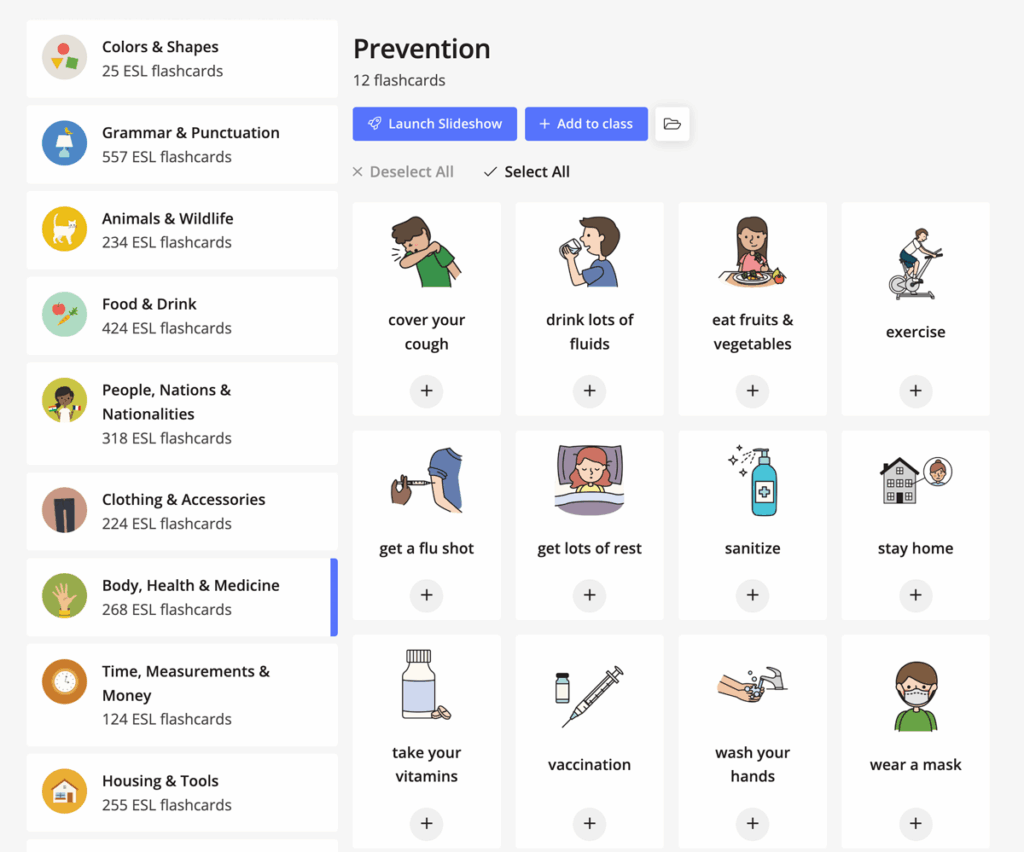
Today’s flashcards are not just printable images. Many platforms, including Ellii, offer digital vocabulary images with audio support and gamification features to go along with digital (or printable) lessons. At Ellii, flashcards are created specifically for English learners by real illustrators who understand the importance of simple, iconic imagery. Teachers can edit the text that goes with these 5,000+ images, making them a practical tool in bilingual programs or for leveling vocabulary up or down in a multilevel setting. Teachers can even get creative and make their own conversation question sets!

Flashcard Library on Ellii

2. Photo Prompts

Why do you think the popular Ventures series starts each unit with a scene called The Big Picture? CUPA author Donna Price often pulls out these detailed image scenes during teacher training sessions to reinforce the power of an image in eliciting language. Each Big Picture scene includes a critical incident, activating students’ prior knowledge and creating opportunities for thematic discussion.

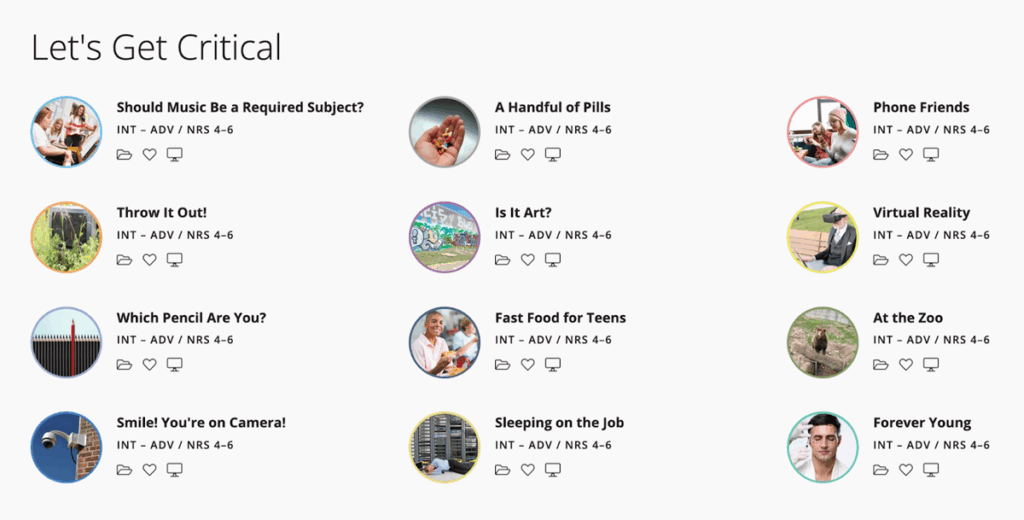
Ellii does something similar with its That’s News to Me section using real photos or videos from The Associated Press. There is also a full section of Photo Prompts that can be used for a variety of activities from vocabulary building to critical thinking. As Emily Bryson points out on the Ellii blog, “Using just one image, students are prompted to describe the photo, make predictions, research the history… explore reasons” and more.

Photo Prompts on Ellii

Language Scenes are a tried-and-true method for eliciting vocabulary and assessing grammar knowledge, helping teachers identify new students’ levels and needs at intake. For the lowest-level learners, including adults preparing for CASAS STEPS, identifying vocabulary through visuals is something emerging learners need to practice in order to demonstrate proficiency.

3. Silent Clips & Video Lessons

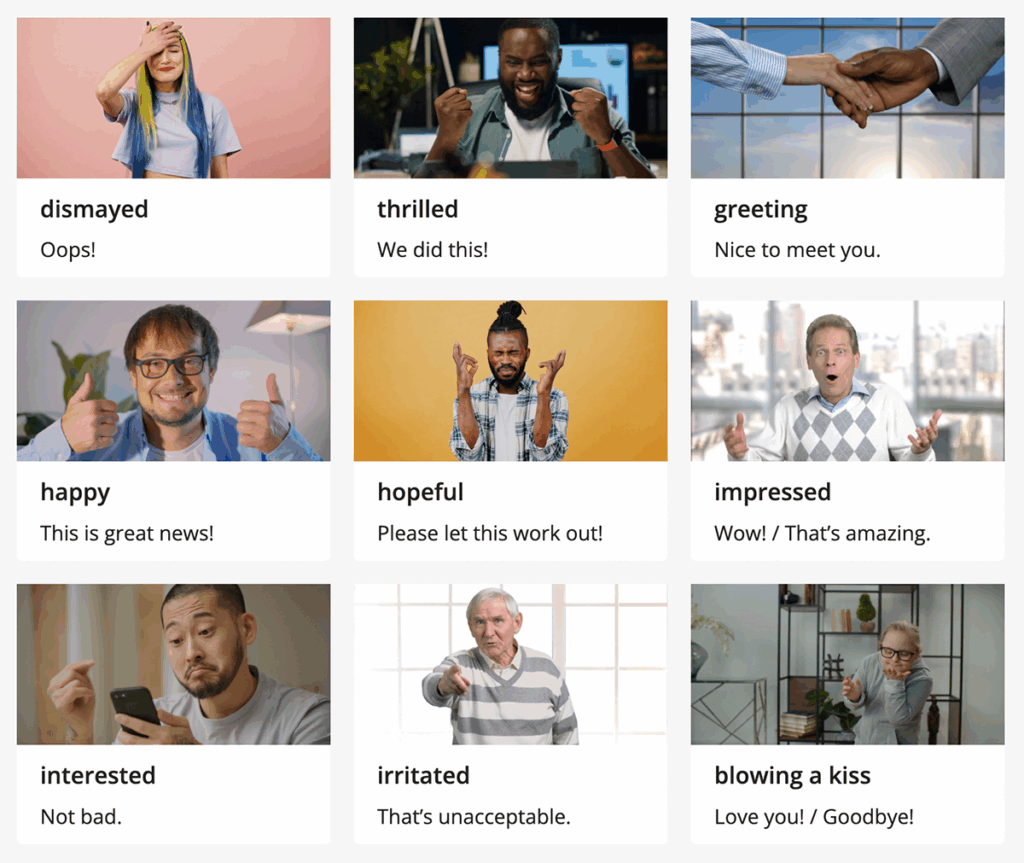
“Sometimes the best way to get a conversation going is to stay silent,” says Emily. Silent Clips are a great way to introduce and review tricky words, including action verbs, emotions, and workplace vocabulary.

Silent Clips on Ellii

And if you want to keep your students truly engaged, video lessons are the number one recommendation, especially in those no-phone classroom zones where students are likely craving more screen time. Over the last few years, Ellii has built up its video library to include 600+ ESL videos, reinforcing everything from grammar targets and pronunciation to life and workplace skills.

4. AI-Generated Imagery

Does AI-generated imagery have a place in ELT? While Ellii is sticking with its human illustrators and photographers for now, there are countless activities that teachers and students can do to hone their prompt-engineering skills. From creating 3D dolls to spotting AI-generated errors, the language opportunities are endless. And, as Caitlin Thomas of National Geographic Learning pointed out at TESOL 2025, “AI fluency is the new digital literacy.” Have some fun! We are!

Ellii plays with AI-generated images

What Literacy Teachers Are Saying about Ellii

"Ellii is the one resource that I recommend to every new teacher. It has a wide range of materials for different student needs. Daily, I use flashcards for my newcomers and the academic resources with my higher levels. Ellii has innovated so much in the past few years and continues to improve the resources available."
Lynn
"Ellii offers great collections to use as an additional resource for younger English learners. The Word Bank lessons can be used to enhance vocabulary and language acquisition and begin the foundations for writing. My students have thoroughly enjoyed the Phonics Stories this year, and flashcards help to facilitate great discussions! A parent of one of my students has even started using Ellii to help with everyday tasks. "
Anon

More #Love4Ellii

Get Texas literacy updates

Join our mailing list so you don’t miss any news:

  • Local and national literacy news
  • Conference updates
  • Regional symposia
  • Best of Texas
  • Advocacy 
  • …more!
Click here to join the list

Filed Under: EAL & ESL, Guest Post, Research & Best Practice, Resources Tagged With: adult literacy, ideas, literacy programs, resources

Who you gonna call? A librarian!

February 10, 2025 by Jenny Walker

Dr. Jenny McCormack Walker

Author: Dr. Jenny McCormack Walker, Literacy Texas Executive Director

Life was pretty lonely for me in 2022 while I was finishing my doctorate and preparing for the final defense of my dissertation. Everyone else in my friend group is cool and fun, so while they watched football and drank beer at the local pizza parlor, I was in the corner booth trying to connect the dots between Paulo Freire and functional literacy.

As I was adding chapters to my paper, I was walking through a very sad chapter in my social life. That was until I made a new friend who matched my extreme level of nerdiness – the librarian.

As I followed one of the thousands of rabbit holes I went down into the abyss of adult literacy research, I stumbled upon a random Powerpoint Presentation that mentioned a statistic I thought seemed interesting and relevant to my study. 

Since this presentation didn’t include references, I knew it would be a long shot to track down the original source of information. I wrote to the presenter, whose email address was listed on the presentation, but received no response. I spent days scouring databases and search engines trying to find the source. When I had exhausted all of the options I could think of on my own, I knew it was time to call in a professional.

I emailed the general library help desk and explained my predicament. Within the hour, I received an email from Emma, a young, newly hired librarian who was eager to help me search. She wanted to learn more about my project and this specific statistic so that she could help me best. We chatted on the phone for about 30 minutes, and then she went to work.

The next morning, I opened my email to 20 new messages. Emma not only was able to track down a valid resource for the statistic I needed, but she had also made contact with the university professor across the country whose graduate student had created that Powerpoint.

Through their exchange, Emma learned that the professor had lost touch with the student but that she had conducted research similar to mine. Emma took it upon herself to make a virtual introduction, and the professor ended up becoming a valuable mentor for me. Emma also found at least 10 other resources that I had never seen that supported my study. She had gone above and beyond, and I felt as though I had hit the research jackpot with Emma.

Over the course of the next year, Emma didn’t mind listening to me geek out over obscure infographics I found, and she cared about the success of my study almost as much as I did. She checked in on me, and she always gave me the best advice for Boolean searches and choosing databases. We never had pizza or beer together, but she certainly became a trusted friend. I felt so fortunate that she answered my email that day.

Looking back, I realize that when I reached out to the library for help, my problem really was not a research issue as much as it was a disconnect in information literacy. I knew there was information I needed to access, but I was at a loss on exactly how and where to find that information.

This is a challenge for many adult learners. They may not be writing academic dissertations, but they often need help simply knowing how and where to find important information. When this situation arises, I hope they find someone like Emma who can help them get connected and care about their success enough to support them like a friend.

Our theme throughout February is Literacy at the Library, and we’re focusing on related topics throughout the month. Plan to join us at our next Best of Texas online session, focused on library literacy programs, on February 27.

Amazing things are happening in Texas!

“Best of Texas” brings local experts together to share their wisdom and experience.

find out more about this monthly series

Filed Under: Digital Literacy, Information Literacy, Library, Literacy for Work, Research & Best Practice, Resources Tagged With: adult literacy, community, ideas, literacy programs, research based

Help Families Achieve More with BurlingtonEnglish

July 25, 2024 by Literacy Texas

This is a guest post from BurlingtonEnglish.

You can visit them at the 2024 Literacy Texas Annual Conference.

In today’s fast-paced world, where information is abundant and constantly evolving, the ability to read, write, and comprehend is more crucial than ever. Yet, many adults face challenges in these fundamental skills, which can affect not only their personal growth but also the ability to support their families.

English proficiency is especially important for language learners and key to accessing better job opportunities, educational resources, and participating fully in the community. Family literacy plays a vital role in enhancing educational outcomes, as parents who improve their skills can better support their children’s education and development. As noted by the Harvard Graduate School of Education, family involvement in literacy significantly boosts children’s positive feelings about learning and their overall literacy performance.

Our Focus on Family Literacy

 Imagine this: a father confidently communicating with his child’s teacher, understanding report cards, and participating in school meetings, all thanks to his improved literacy skills. This scenario showcases the impact of Burlington Core, a standards-based, blended curriculum that equips individuals with essential skills to enhance their personal and professional lives.

 Our curriculum opens doors for adult learners by equipping them with the skills needed to find a job and succeed at work, assist their children with homework, and communicate effectively at school or the doctor’s office. This involvement doesn’t just boost academic and professional performance; it contributes to building family literacy.

Personal Challenges for Adult Learners

 Adult language learners often face barriers to learning such as financial constraints, lack of access to resources, and time limitations due to work. By increasing the availability of flexible learning options and offering personalized support and guidance, we can empower individuals to overcome these obstacles and achieve their educational and life goals.

Our Solution to Overcoming Challenges

 Burlington developed our standards-based, flexible curriculum using the best methods identified by linguists, educators, and software developers for overcoming the specific challenges of language learning. Our unique blended learning solution combines face-toface teacher-led instruction with anytime, anywhere access to online independent student lessons.

Success Stories

 Behind every family literacy and adult education program are inspiring success stories of individuals who have transformed their lives through learning. Take, for instance, Helen (Hoa), who came to the U.S. from Vietnam. She began her English studies at Simi Institute in 2010, determined to improve her language skills despite being deaf in one ear. Helen’s dedication drove her to set an alarm for 4:00 am daily to practice pronunciation using BurlingtonEnglish. Her improved communication skills boosted her confidence and enabled her to better support her children’s education.

In 2018, when Helen’s husband became seriously ill, she became the primary income provider. Despite these challenges, she continued her education and completed a Business English course. In October 2021, Helen achieved her dream of becoming a business owner by purchasing a salon in Westlake Village. Her success story illustrates the profound impact of adult education on family literacy and economic stability. Helen’s story is just one example of how BurlingtonEnglish can transform lives.

 Here are some more powerful testimonials from educators and students who have experienced the benefits of BurlingtonEnglish firsthand:

Sarita Akhtar, ESL Program Developer/Trainer at Indian River State College, shared: “Burlington has helped our students achieve their goals and make their career dreams come true. I have had students pass their State Board Exams for CNA/Home Health Aide and credited using the Burlington program. What an incredible tool we have provided them with. Thank you, Burlington!”

Karen Ling, Supervisor at Shared Time/Adult Education recounted another impactful story: “My student shared a powerful success story with the class. She explained that the Health unit in BurlingtonEnglish really helped her communicate with her child’s pediatrician. I know this seems simple, but I think we all know just how empowering this is for our students. Thank you, BurlingtonEnglish!”

These testimonials highlight the real-world impact BurlingtonEnglish has on individuals and their families, providing them with the skills and confidence to succeed in their personal and professional lives.

Conclusion

 Burlington’s approach to family literacy and adult education is not just about teaching basic skills; it is about empowering individuals to create a future where every adult has the chance to reach their full potential, every child grows up in a nurturing learning environment, and every family thrives.

Get Texas literacy updates

Join our mailing list so you don’t miss any news:

  • Local and national literacy news
  • Conference updates
  • Regional symposia
  • Best of Texas
  • Advocacy 
  • …more!
Click here to join the list

Filed Under: Guest Post, Research & Best Practice, Resources, Student Goals Tagged With: adult literacy, ideas, literacy programs

Hot Summer Days Need a Cool Program Management Solution

July 27, 2023 by Kathryn Bauchelle

This is a guest post from CommonTeri Services.

You can visit them at the 2023 Literacy Texas Annual Conference Registration Desk.

Greetings from the CommonTeri team!

Summer may be a time for vacations but it can be a busy time for adult and family literacy programs. Wrapping up the Spring semester and prepping for Fall programs can keep your team busy.

What about your data?

How easily can you get what you need for annual funding reports?

Do you wish your program management process were more streamlined?

How quickly can you get new activities added and the students enrolled?

Summer is a good time to evaluate how well your data system works for you. If keeping up with your data takes time and energy away from your focus on improving adult literacy, consider moving to a new data solution. A robust, flexible system makes it easier to:

  • manage and serve participants,
  • engage and utilize volunteers,
  • plan and organize activities, and
  • track and report on outcomes.

5 key traits for a quality data solution for program management are:

  1. User-friendliness. Can your team get key tasks done easily and quickly, with a manageable amount on onboarding and training?
  2. Capability. Does your team have the necessary tools and options, plus automation to support daily processes?
  3. Adaptability. Will your team be able to customize for organization-specific needs with a minimal amount of cost and time?
  4. Security. Does your team feel confident that the data is stored and accessed securely, with regular updates and maintenance to meet changing best practices?
  5. Long-term relevance. As your team looks to the future, can they be assured that the solution will continue to support them as the organization grows and changes?

The Salesforce app Literacy Nimbus (LitNim) is built on Salesforce technology and is designed specifically for nonprofits and literacy programs. It has all five traits, plus a team of forward-thinking Salesforce and nonprofit management experts who’d love to help you. 

Recently, the LitNim team began work on a new constituent portal to expand secure online data access and provide web-based forms for many common nonprofit uses such as registration, intake, event ticketing, enrollment, and attendance.

When you invest in a data solution, you want to make sure it works well now and for years to come. If you feel overwhelmed and frustrated with your data management, it may be time for a change. Having a quality data solution has real benefits for staff and organizations, including more time to focus on your mission and the students you serve. We encourage you to consider, explore, and ask questions to find the right data solution for you!

For more information:

  • Visit our website
  • Reach out via our webform
  • Find LitNim on the Salesforce AppExchange
  • Get details about the Constituent Portal

Get Texas literacy updates

Join our mailing list so you don’t miss any news:

  • Local and national literacy news
  • Conference updates
  • Regional symposia
  • Best of Texas
  • Advocacy 
  • …more!
Click here to join the list

Filed Under: Annual Conference, EAL & ESL, Fundraising, High School Equivalency, Program Evaluation, Resources

How the ReaderPen Can Foster Independent Reading

July 30, 2022 by Kathryn Bauchelle

This is a guest post from Scanning Pens, one of the exhibitors at the 2022 Literacy Texas Annual Conference. Visit their booth in the Exhibitor Hall starting Sunday evening (July 31)!

Reading is a key that has the power to unlock many doors throughout a lifetime. It can be the catalyst that allows development in education to take place, open up career opportunities and further study, and it’s the cornerstone of how we communicate and navigate the world.

We know that neurodiversity (including dyslexia, ADHD and dyspraxia) presents a host of unique challenges when studying and reading. For some, it can induce reading anxiety, or make reading feel impossible – and that’s where we see these doors begin to lock from the inside, cutting readers off from the activities and experiences that they may aspire to. Confidence gets lost, reading develops negative associations, and many children and young people disengage from learning – which can have whole-life consequences.

So how can we open these doors again, and create a landscape where all readers are confident, able and empowered to take on reading?

Finding the right reading support can be a complex issue as no two readers are the same: many educational settings turn towards human support readers to help individual learners with reading tasks, however this method can end up being counterproductive when it comes to fostering reading independence. The idea of having a human support can make reading feel difficult when that support individual isn’t there, meaning that reading becomes something that happens in school time, instead of anytime and everywhere. It also implies to some that reading has to be assisted, and some will begin to doubt their ability to read alone. It also should be noted that in classroom settings, the act of having a support reader present consistently can make some learners feel singled out and policed, even when they haven’t done anything wrong.

So that’s where the ReaderPen comes in.

The ReaderPen is a piece of Assistive Technology by award-winning assistive tech suppliers Scanning Pens. It looks similar to a highlighter pen, but with a digital functionality that can transform the reading experience. Users simply scan the words on the page and can experience them in audio in a way that clarifies meaning, supports developing skills and empowers them as they read. It helps beat anxiety, as readers feel independent and able to tackle reading alone – and built-in dictionary support ensures that new or complex words aren’t simply read, they’re learned too.

They’re a cornerstone of creating a learning environment that’s neurodiversity-positive, have the power to level the playing field when it comes to exams and testing – and thanks to a long-life battery, can be easily used on the go, outside of the classroom too.

The ReaderPen is a support mechanism that not only targets reading anxiety at its source, but helps educators manage their time too. If a class teacher can pull away from individual reading support, it means that they’ve got more time to focus on whole-class activities and the administrative tasks of the lesson. It can also represent a much more school budget-friendly means of ensuring that every child who needs reading support has access to it, with no ongoing salaries or subscription services- and it can be accessed via the funding made available by the US Department of Education.

Reading support is all about giving learners of all ages the confidence and independence to experience their education in comfort. Find out more about award-winning assistive tech solutions and how they transform lives at www.scanningpens.com; or check out the ReaderPen today.

Scanning Pens - Trademarked Logos_SP - TM

Thank you Scanning Pens for your support of the 2022 Literacy Texas Annual Conference!

Filed Under: Annual Conference, Resources

Sign up for our newsletter and receive adult literacy news and events.

Subscribe Now
mailbox (1)
Mailing Address:
Literacy Texas
P.O. Box 111
Texarkana, TX 75504
903-392-9802
Online Contact

Quick Links

  • Home
  • What We Do
  • Annual Conference
  • Regional Symposia
  • Calendar
  • Home
  • What We Do
  • Annual Conference
  • Regional Symposia
  • Calendar
  • Defining Literacy
  • Literacy Facts
  • Resources
  • Contact Us
  • Donate
  • Defining Literacy
  • Literacy Facts
  • Resources
  • Contact Us
  • Donate

Events Calendar

  • Nov 13
    Best of Texas: Adult Learner Persistence & Retention
    November 13th
    View Details
  • Nov 14
    South Texas Literacy Symposium
    November 14th
    View Details
  • Dec 4
    What Leaders Need: Finding & Keeping Amazing Volunteers
    December 4th
    View Details
  • View Calendar
Copyright 2025 Literacy Texas | All Rights Reserved | Web Design and Marketing by Web International | View our Privacy Policy
  • Home
  • What We Do
    • Annual Conference
      • Location & Venue
      • Theme & Focus
      • Request for Proposals (RFP)
      • Schedule & Program
      • Breakout Sessions
      • Conference Presenters
      • Registration
      • Scholarships & Grants
      • Sponsors & Exhibitors
      • Past Conferences
    • Regional Symposia
    • What Leaders Need
    • Best of Texas
    • The Expert Edge
    • Advocacy
      • National Adult Education & Family Literacy Week
    • Annual Survey
  • Why Literacy?
    • Defining Literacy
    • Literacy Facts
    • Literacy & the Economy
  • Calendar
    • Literacy Texas Events
    • Literacy Calendar
  • Resources
    • Nonprofit Administration
    • Program Structure
    • Classroom Instruction
    • Grants, Funding, & Rebates
    • Organizations, Groups, & Media
    • Plain Language
  • Connect
    • Find a Program
    • Ways to Give
    • Blog
    • Newsletter
    • Contact Us
  • About
    • History
    • Mission
    • Leadership
  • Impact
    • Celebrating Students
      • 2024 Student Hall of Fame
      • 2023 Student Hall of Fame
      • 2022 Student Hall of Fame
    • Celebrating Volunteers
      • 2024 Volunteer Hall of Fame
      • 2023 Volunteer Hall of Fame
      • 2022 Volunteer Hall of Fame
    • Learner Stories
    • Testimonials
  • Home
  • What We Do
    • Annual Conference
      • Location & Venue
      • Theme & Focus
      • Request for Proposals (RFP)
      • Schedule & Program
      • Breakout Sessions
      • Conference Presenters
      • Registration
      • Scholarships & Grants
      • Sponsors & Exhibitors
      • Past Conferences
    • Regional Symposia
    • What Leaders Need
    • Best of Texas
    • The Expert Edge
    • Advocacy
      • National Adult Education & Family Literacy Week
    • Annual Survey
  • Why Literacy?
    • Defining Literacy
    • Literacy Facts
    • Literacy & the Economy
  • Calendar
    • Literacy Texas Events
    • Literacy Calendar
  • Resources
    • Nonprofit Administration
    • Program Structure
    • Classroom Instruction
    • Grants, Funding, & Rebates
    • Organizations, Groups, & Media
    • Plain Language
  • Connect
    • Find a Program
    • Ways to Give
    • Blog
    • Newsletter
    • Contact Us
  • About
    • History
    • Mission
    • Leadership
  • Impact
    • Celebrating Students
      • 2024 Student Hall of Fame
      • 2023 Student Hall of Fame
      • 2022 Student Hall of Fame
    • Celebrating Volunteers
      • 2024 Volunteer Hall of Fame
      • 2023 Volunteer Hall of Fame
      • 2022 Volunteer Hall of Fame
    • Learner Stories
    • Testimonials